Gummy Smile
GUMLIFT is the term coined by me in 1988. It refers to a crown lengthening procedure that is done for cosmetic reasons to correct a “gummy smile”.
Crown lengthening procedure is not new at all. It has been done for decades by dentists around the world for teeth that are broken or decayed at the neck. However, I was one of the first dentists if not the first dentist that adapted this procedure for cosmetic correction of gummy smiles.
Over the past 20 years or so, I have treated over a thousand of various types of gummy smiles. Although I have done dozens of simple contouring of the gums by LASER treatment of the overgrown gums, most of my cases have been more complex and involved. By observing and studying the result of hundreds of cases in each category, I have been able to refine my surgical technique for ideal and predictable results.
Most importantly, I am able to pick and choose the perfect combinations of surgical and restorative techniques for the ideal results. All the practitioners I know today only perform either one or the other type of the surgical correction of the gummy smile. A few plastic surgeons try to cover the gummy smile by lip repositioning. The restorative treatment of most dentists consist of simple porcelain veneers on the front teeth and those who place the veneers are usually not the ones who do the surgical procedure. The result is less than ideal because depending on whose office (surgeon or restorative dentist) the patient initially visits, that procedure is more likely to be suggested to the patient. Needless to say that the result is not very predictable when you are dealing with multiple practitioners.
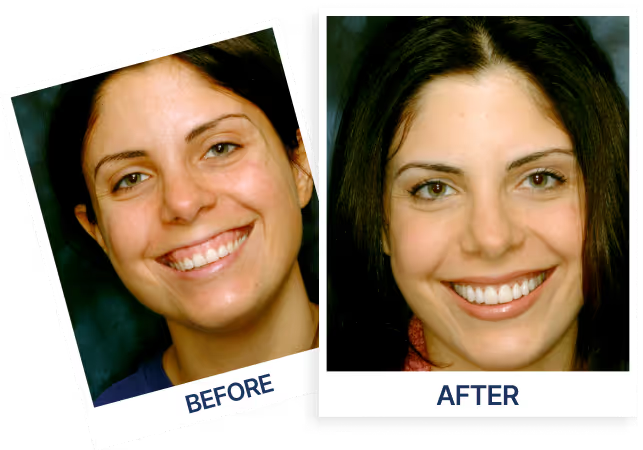
Most dentists are capable of trimming some degree of excessive gum tissue either by LASER or scalpel. This simple method has its own place in cosmetic dentistry. However, the use of this method is very limited to those cases that have simply overgrown gum tissue. Gina is a good example of overgrown gum that I treated by simply recontouring of the gum by a Diode LASER.
Many of the patients who visit me for treatment of gummy smile present a more severe situation like Mira and Brea’s example. They both had orthodontic treatment in the past and were left with the gummy smiles that you see in the pictures. Their treatment was a complete gumlift that involved reshaping the underlying bone as well. I performed the surgery in about 3 hours under IV sedation.

Mary’s case is an example of a gummy smile in a person that also needed improvement in shapes of her teeth. In this case, After the surgical treatment, I placed porcelain veneers on her teeth to complete her smile.


Carol is an example of the category of gummy smile correction that I get referral from all over the country. It produces the most dramatic improvements in the patient’s smile. In this example I treated Carol’s daughter who interestingly had the exact same issues first. Carol saw the great results and signed up for the same procedure about a year later.
In this case, I used three surgical procedures as phase I of the treatment. I performed a surgical gum lift, removed the bulk of the bone from the upper jaw and did a lip-tuck procedure all in one day under IV sedation. In phase II of her treatment, I performed a restorative gum lift and placed porcelain veneers and crowns on her teeth.
Joan is another example of a very complex case. Her main complaint was inability to close her mouth. She had a history of wearing braces for 4 years and she loved the size and shape of her front teeth. She did not like the gummy smile. Through a combination of surgical and restorative gum lift, I maintained her original teeth size and shape while reducing her gummy smile and closing her bite significantly.


Word of advice for treatment of gummy smile:
I have been treating gummy smiles for over 20 years now. In the last decade I have treated many patients who had been treated for this condition by plastic surgeons and periodontists with either relapse or less than desired results. Although the oral surgeons and periodontists receive 2-4 years of surgical training in school, and that makes them good surgeons, they lack the restorative training and experience of a cosmetic dentist to foresee the result of their case in an optimum and ideal way. In other words, a cosmetic procedure must begin with the end in mind. Needless to say that for a cosmetic procedure, the cosmetic dentist (general dentist) must be the designer or the architect. As we see in the last 3 examples, the ideal cosmetic result would NOT be possible without the final restorations. If the surgical phase is delegated to another office/dentist, the surgeon must follow the recommendations of the cosmetic dentist. To start the treatment of gummy smile at the surgeon’s office, is like starting to build a house by placing plumbing and electrical wires on the ground and then having the general contractor build the walls around the pipes and wires!
Even when you start at the right place, the general or cosmetic dentist, the results may be unpredictable or undesirable due to inadequate communications between the cosmetic and surgical offices. In my office, I personally design the case, show you the computer imaging of our goal, perform the surgical phase and complete the cosmetic phase. Since all of it is done by me under one roof, there is neither issue of “communication errors” nor any confusion about responsibility for the outcome.
Bottom line is that your cosmetic dentist must be able to show you dozens of before and after pictures of very similar cases to yours with great results that he or she has personally treated and that you can verify by being able to contact those patients personally and ask about their experience. Yes, I have hundreds of patients that for various reasons do not want to be bothered by prospective patients’ inquiries or do not want their pictures shown, but I have treated enough individuals with altruistic souls who do not mind helping another person get over their fears and make the life changing improvements that they experienced.